






Sylhet is not like any other part of Bangladesh. Misty hills, endless tea gardens, and roads that make you want to disappear for a weekend. That is the Sylhet experience in a sentence.
While the rest of the country gives you rivers, cities, and coast, Sylhet gives you something else. Waterfalls tucked inside jungle trails. Rivers are so clear you can see the bottom. Forests that stay underwater for half the year. A shrine that has drawn pilgrims for seven centuries. And tea estates are so vast they seem to go on forever.
This is Bangladesh's greenest destination, and it earns that title.
Most travel guides stick to the same six or seven names: Jaflong, Ratargul, Lalakhal, Sreemangal, Bichanakandi, Madhabkunda. Those places are all worth visiting. But Reddit travelers and travel forum communities are increasingly searching for something more. Less crowded nature spots. Hidden waterfalls. Local Khasi villages. Quiet tea garden roads that no tour bus visits.
This guide covers all 15 places, from the famous to the genuinely overlooked. By the end, you will have a complete Sylhet travel plan that goes well beyond the usual checklist.
1. Take a Boat Through Jaflong
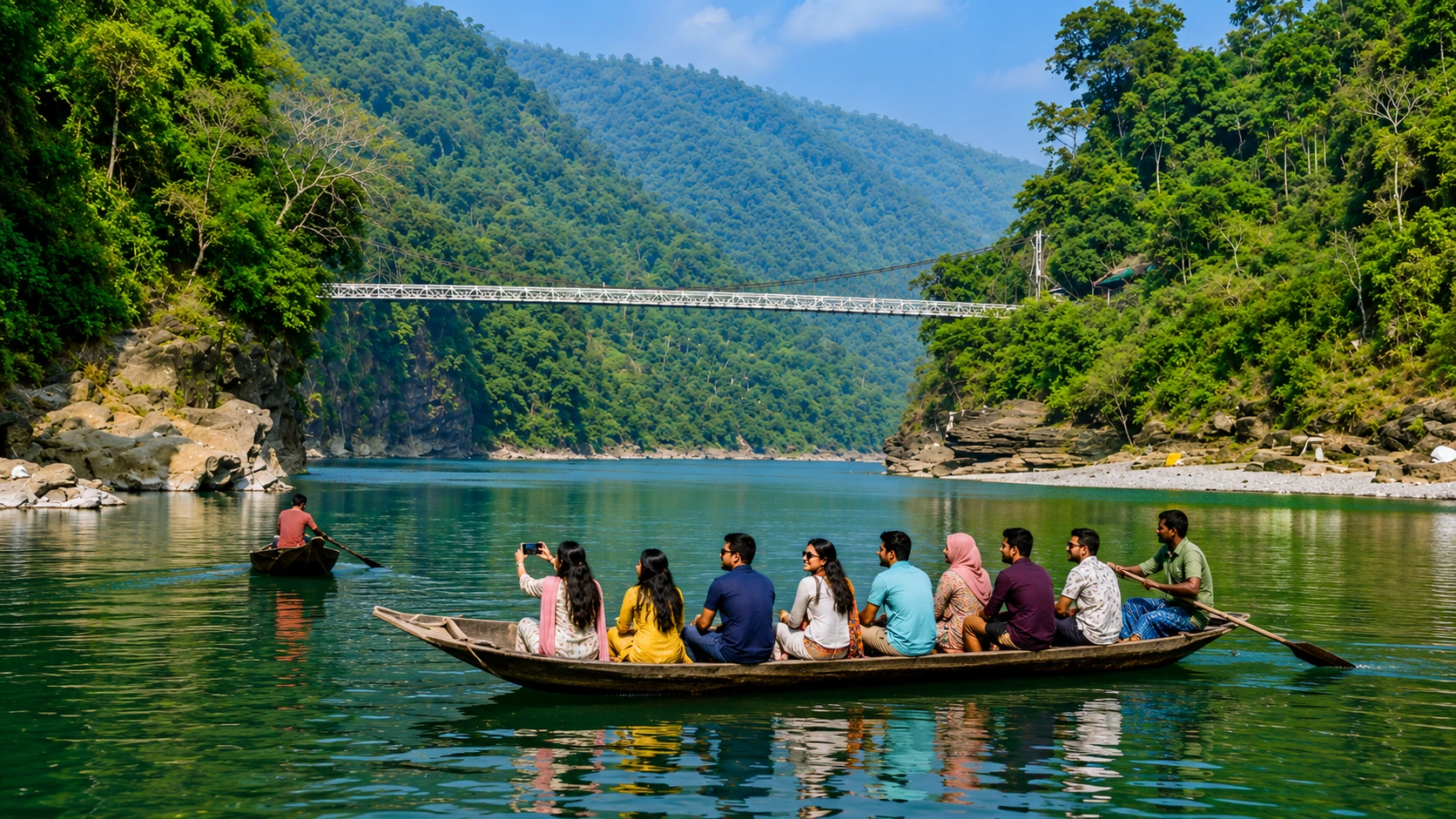
Jaflong sits right on the border with Meghalaya, India. The hills on the Indian side rise dramatically above the river, and the clouds that gather around them make the whole scene look almost painted. This is one of those places where even a bad phone camera takes a great photo.
The river here runs crystal clear. Stone collectors wade into the water pulling smooth rocks from the riverbed, and you can watch them work while your boat drifts along. The Khasi village nearby adds a real cultural layer to the visit.
Things to do here:
Take a boat ride along the Piyain River
Walk through the Khasi village and see how the community lives
Photograph the hills, clouds, and river from the bank
Best time to go: Monsoon and post-monsoon season, from June to October. The hills turn deep green, the river fills up, and the clouds sit low over the Indian side in a way that looks almost cinematic. Jaflong in winter is quieter and easier to visit, but the monsoon version is the one people remember.
Getting there: From Sylhet city, take a CNG or reserved car to Jaflong. The journey takes about one hour. A reserved car for the day costs between BDT 1,500 and BDT 2,500 depending on negotiation.
2. Ride a Boat Through Ratargul Swamp Forest-One of the Best Places to Visit in Sylhet
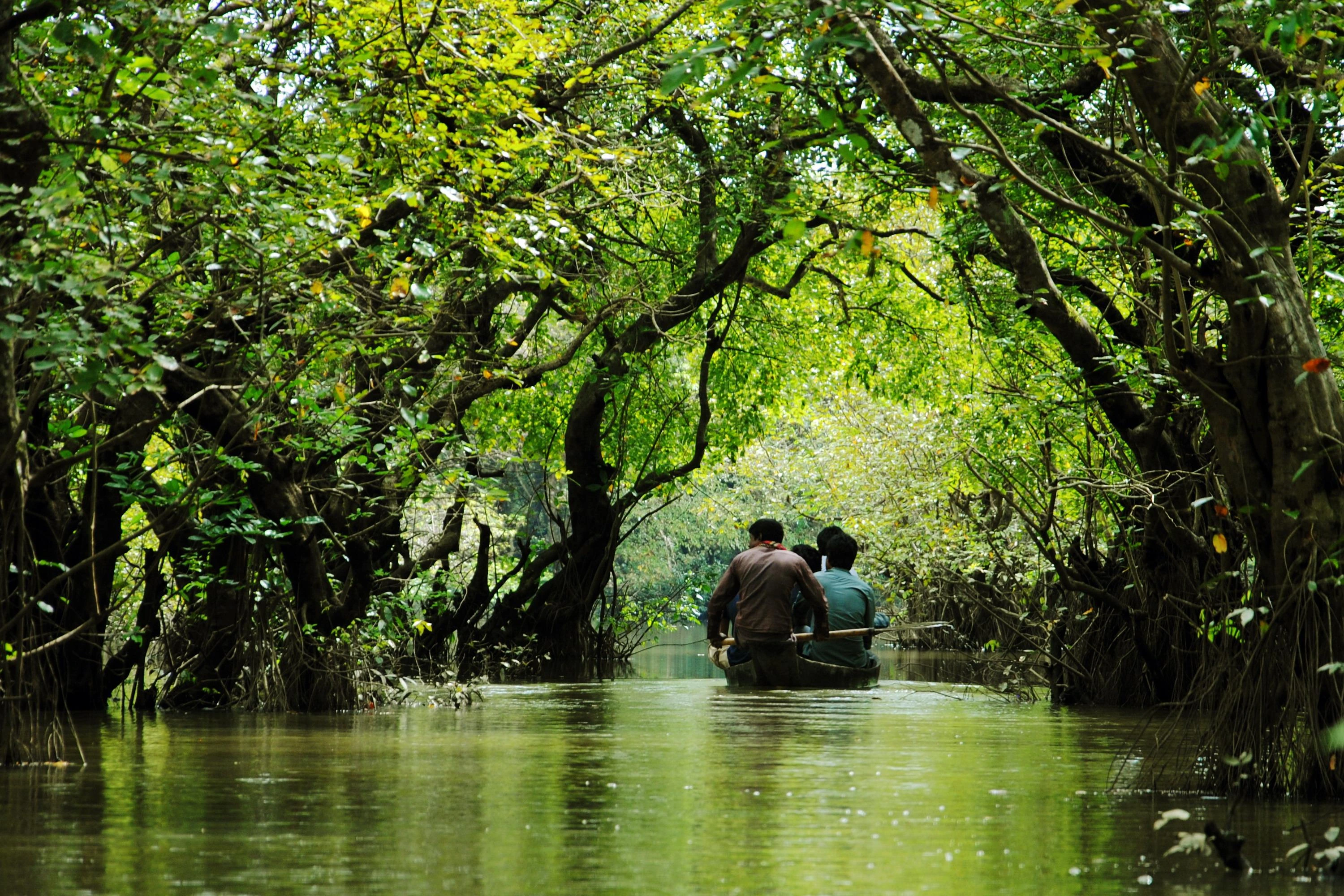
Ratargul is often called the Amazon of Bangladesh or the Sundarbans of Sylhet. Both nicknames are earned. The forest covers 3,325 acres, with 504 acres declared as a wildlife sanctuary. It is located 26 kilometres from Sylhet city.
What makes Ratargul genuinely unique is the flooding. The forest goes underwater for most of the rainy season, submerged under 20 to 30 feet of water. You ride a small wooden boat through the trees. The branches hang overhead. The water is calm and dark green. It looks nothing like anything else in Bangladesh.
The forest is fed by the Gowain River at the foothills of the Jaintia Hills in India and remains underwater for five to six months each year, typically from May to October.
Main things to experience:
Boat rides through the flooded forest interior
Birdwatching along the water channels
The Ratargul watch tower for panoramic views above the tree line
Best time to visit: Monsoon season, when the water levels are at their highest. Outside monsoon, the water drops and the forest loses much of its magic.
Getting there: From Sylhet's Ambarkhana point, take a CNG toward Shringi Bridge. A shared ride costs around BDT 80 per person. From the bridge, hire a local boat to enter the forest. Boat fares range from BDT 700 to BDT 1,500. The entry fee is BDT 50 per adult.
3. See the Turquoise Water at Lalakhal

Lalakhal is famous for one thing: the color of the water. Depending on the time of day and the angle of the sun, the river shifts between turquoise, emerald green, and deep blue. No filter required. This is what the water actually looks like.
The surrounding hills and tea gardens frame the river on both sides, so every direction you look gives you something worth photographing. The water changes color throughout the day, so if you arrive at noon and the shade is not quite right, wait an hour. Lalakhal in the afternoon light looks completely different from Lalakhal in the morning. Both versions are worth seeing.
Things to do here:
Take a boat tour along the river and into the quieter channels
Stop at one of the riverside lunch spots and eat local food on the water
Photograph the river in the early morning when the light is at its best
Best time to visit: Winter months from November to February give you the clearest water and the most comfortable boat ride conditions. Early morning is always the best window for the color.
Getting there: Lalakhal is about 35 kilometres from Sylhet city. Take a CNG or reserved car from the city center. The ride takes around 45 minutes to one hour.
4. Cross the River to Bichanakandi
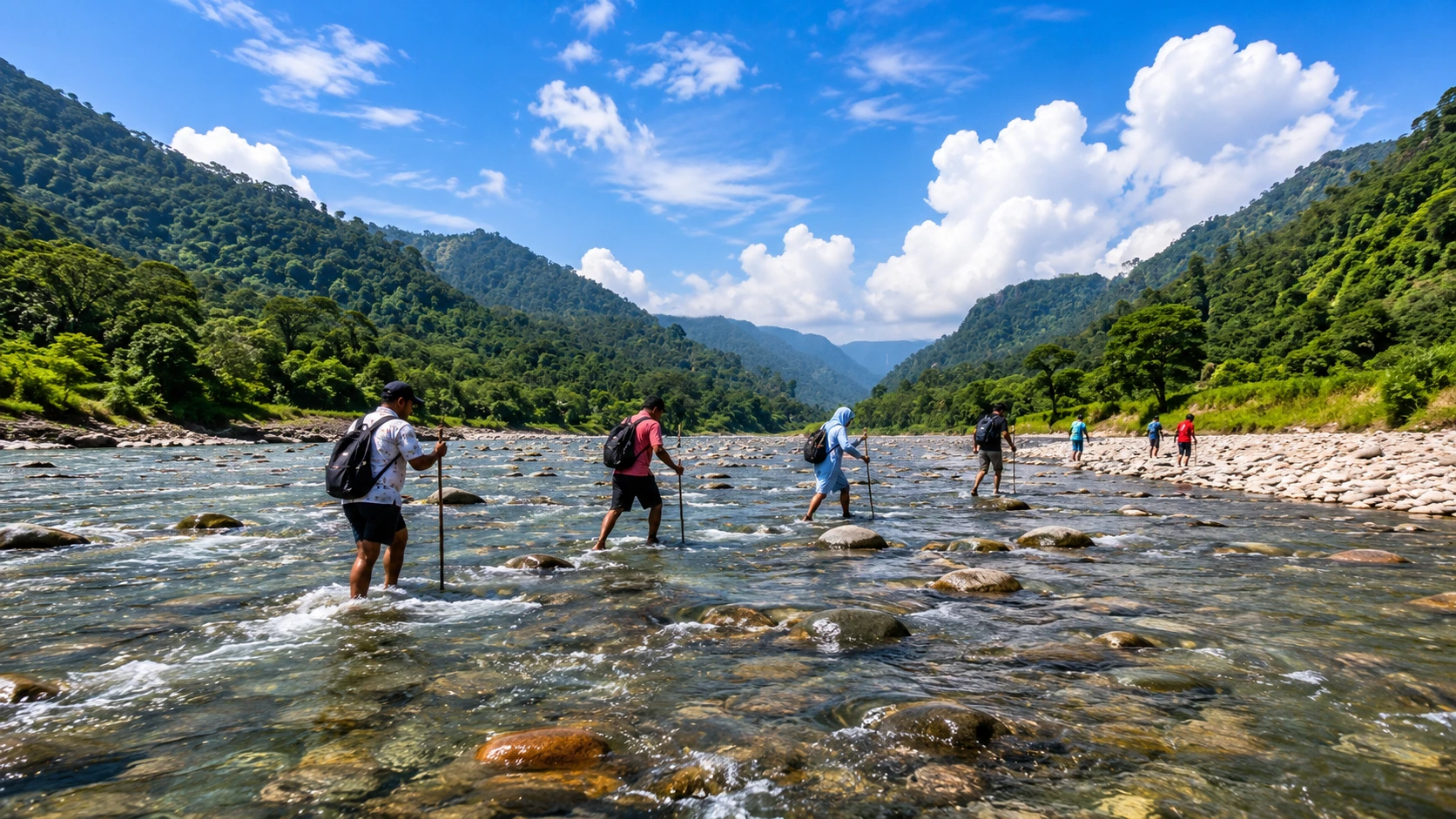
Bichanakandi sits near the Indian border and feels like a different world from the moment you step off the boat. The river here runs between large smooth boulders. Mountain water streams down from the hills above. On rainy days, small waterfalls appear along the hillsides that are not there at any other time.
Getting here is part of the experience. You cross rivers and pass through small villages on a boat journey that takes you away from any main road. Monsoon season transforms Bichanakandi completely. The water level rises, the rocks glisten, and the hillside waterfalls come to life. Even if you are not a monsoon traveler, Bichanakandi is hard to skip.
Things to do here:
Walk across the stone-covered landscape that lines both sides of the river
Watch the mountain streams flowing down through the rocks
Photograph the rain-fed waterfalls that appear during monsoon
Best time to visit: Monsoon season from June to October for the fullest water and the most dramatic scenery. Winter visits are quieter but still worth it for the boulders and clear river.
Getting there: Head to Gowainghat from Sylhet city by CNG or reserved car. From Gowainghat, take a local boat to Bichanakandi. The boat ride itself takes around 30 to 45 minutes through villages and open water.
5. Cycle Through Sreemangal Tea Gardens
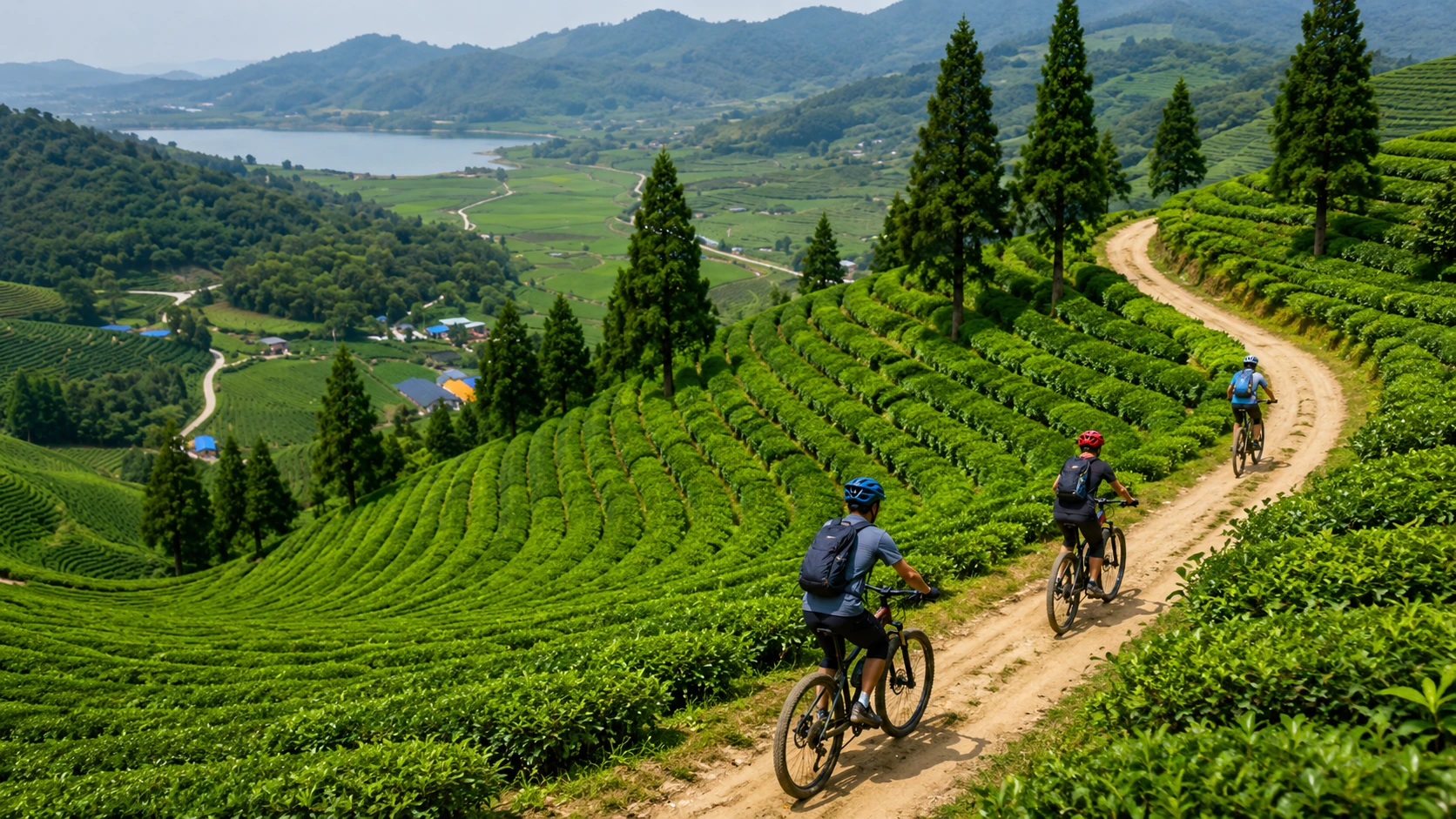
Sreemangal is Bangladesh's tea capital. This region produces more tea than anywhere else in the country, and the estates here stretch in every direction as far as you can see.
The Finlay Tea Estate is one of the largest and most photogenic. Rows of low green tea bushes run across the hillsides in perfectly even lines. Women in colorful sarees move between the rows with baskets. The scene looks like a painting. Sreemangal is not just a photo stop. It is a place where you slow down, drink tea, and let the green hills do their work on you.
Things to experience here:
Cycle along the roads that wind through the tea estates. It is the best way to cover ground slowly enough to actually enjoy the view
Try the seven-layer tea at Nilkantha Tea Cabin. Each layer has a different flavor and color. It is genuinely unlike any tea you have had before
Walk through the Finlay Tea Estate and watch the whole tea-making process
Best time to visit: Winter from November to February gives you cool, pleasant weather for cycling. The tea bushes stay green year-round, so the visual experience is consistent across all seasons.
Getting there: Sreemangal is about 80 kilometres from Sylhet city. Take a train from Sylhet or Dhaka and get off at Sreemangal station. Rent a bicycle from the town center for BDT 100 to BDT 150 per day.
6. Trek Inside Lawachara National Park
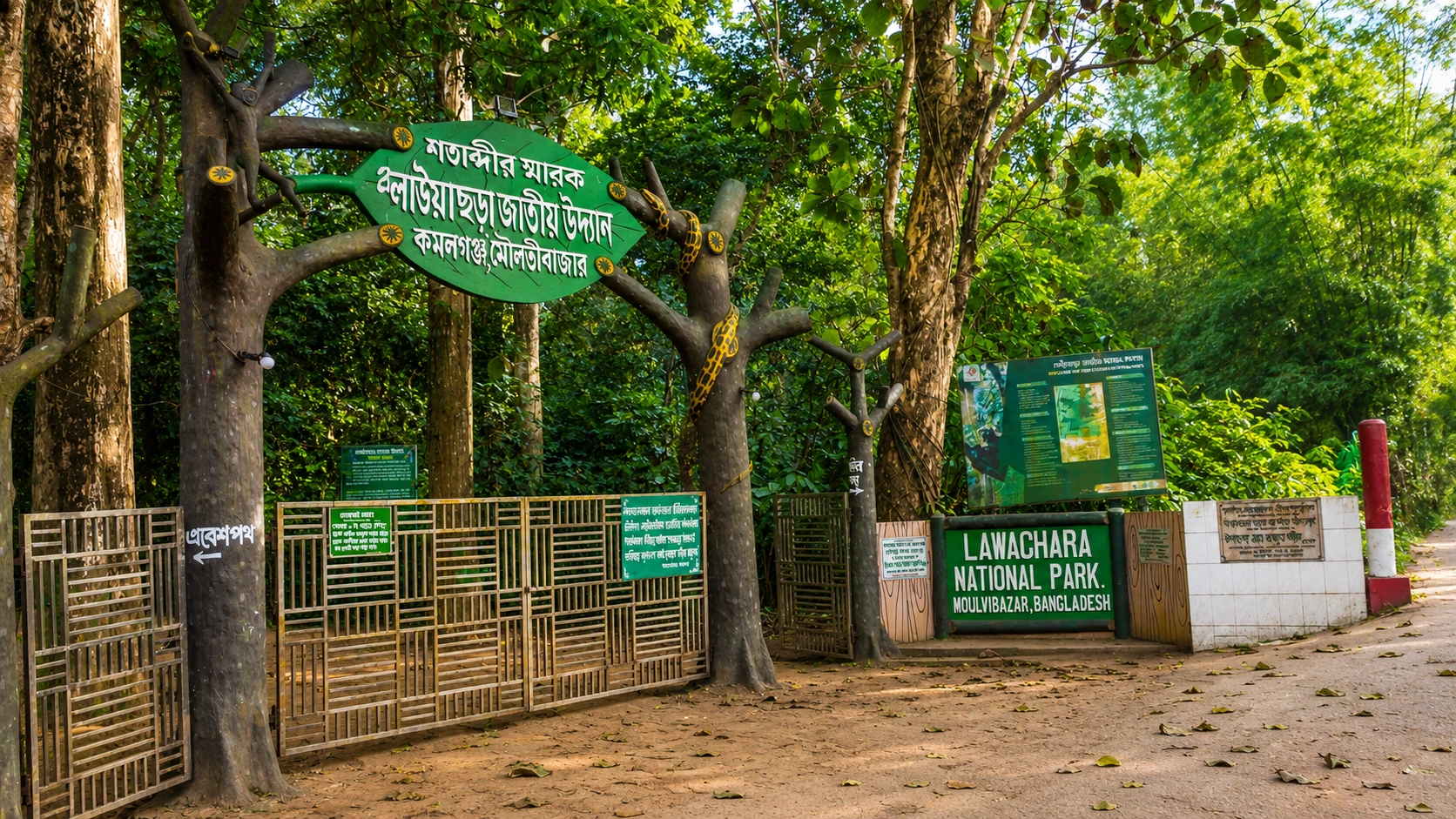
Lawachara National Park spans 1,250 hectares in Moulvibazar district and is one of the last remaining strongholds of the critically endangered hoolock gibbon in Bangladesh. That matters because the hoolock gibbon is Bangladesh's only ape. A 2007 census found only 62 individuals in 17 groups in Lawachara and the surrounding West Bhanugach Reserved Forest. This is the largest surviving gibbon population in the country. Hearing them call through the trees is a genuinely rare wildlife moment.
The park hosts 460 species of flora and fauna, including 167 species of plants, 246 birds, and 20 mammals. Two Khasi tribal villages sit inside the park boundaries, so the forest walk takes you past actual living communities, not just trees and wildlife.
Things to do here:
Trek the marked forest trails through the semi-evergreen rainforest
Look and listen for hoolock gibbons in the canopy, especially in the morning
Cross the hanging bridge over one of the forest streams
Birdwatch along the trail edges where the light breaks through
Best time to visit: November to March gives you the best trekking weather. The trails are drier, the gibbon calls carry further in the cooler air, and the forest is easier to move through.
Getting there: Lawachara is 8 kilometres from Sreemangal town. Take a CNG from Sreemangal for around BDT 80 to BDT 150. The park is also easy to combine with a Sreemangal tea garden visit on the same day.
7. Stand Under Madhabkunda Waterfall
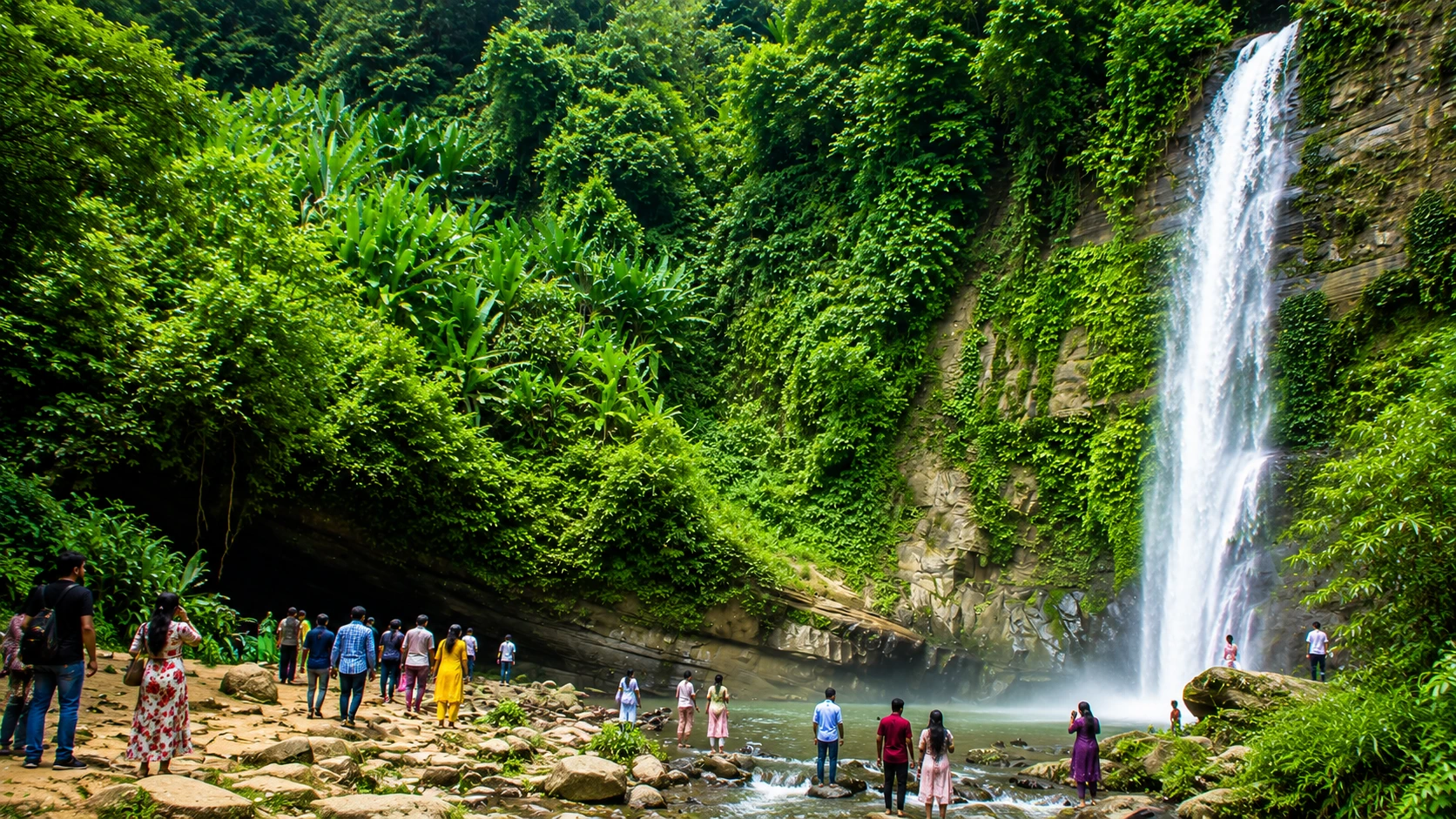
The Gangamara stream cascades 162 feet down from the rocky Patharia Hill to form Madhabkunda Waterfall. That makes it one of the tallest waterfalls in Bangladesh. During monsoon, a second stream forms alongside the main one. When they merge, the combined volume turns the waterfall from impressive to thunderous.
The 267-hectare Madhabkunda Eco Park, established in 2001, surrounds the waterfall and contains tea estates, orange groves, betel nut gardens, and a Khasi tribal village where residents grow traditional crops on forestland.
What to expect on your visit:
A powerful waterfall framed by large black boulders and dense forest
A walk through the eco park past tea gardens and citrus trees on the way to the falls
The nearby Parikunda Waterfall, a 10 to 15 minute walk along the stream
Best time to visit: Monsoon season gives you the most dramatic waterfall. Winter is easier to travel and the paths are safer, but the water volume drops significantly.
Getting there: Madhabkunda is about 80 kilometres from Sylhet city. Take a bus or train toward Kulaura, then hire a CNG to Kathaltali Bazar. From there, another short CNG ride reaches the eco park entrance. The entry fee is BDT 20 per person.
8. Hike to Hum Hum Waterfall
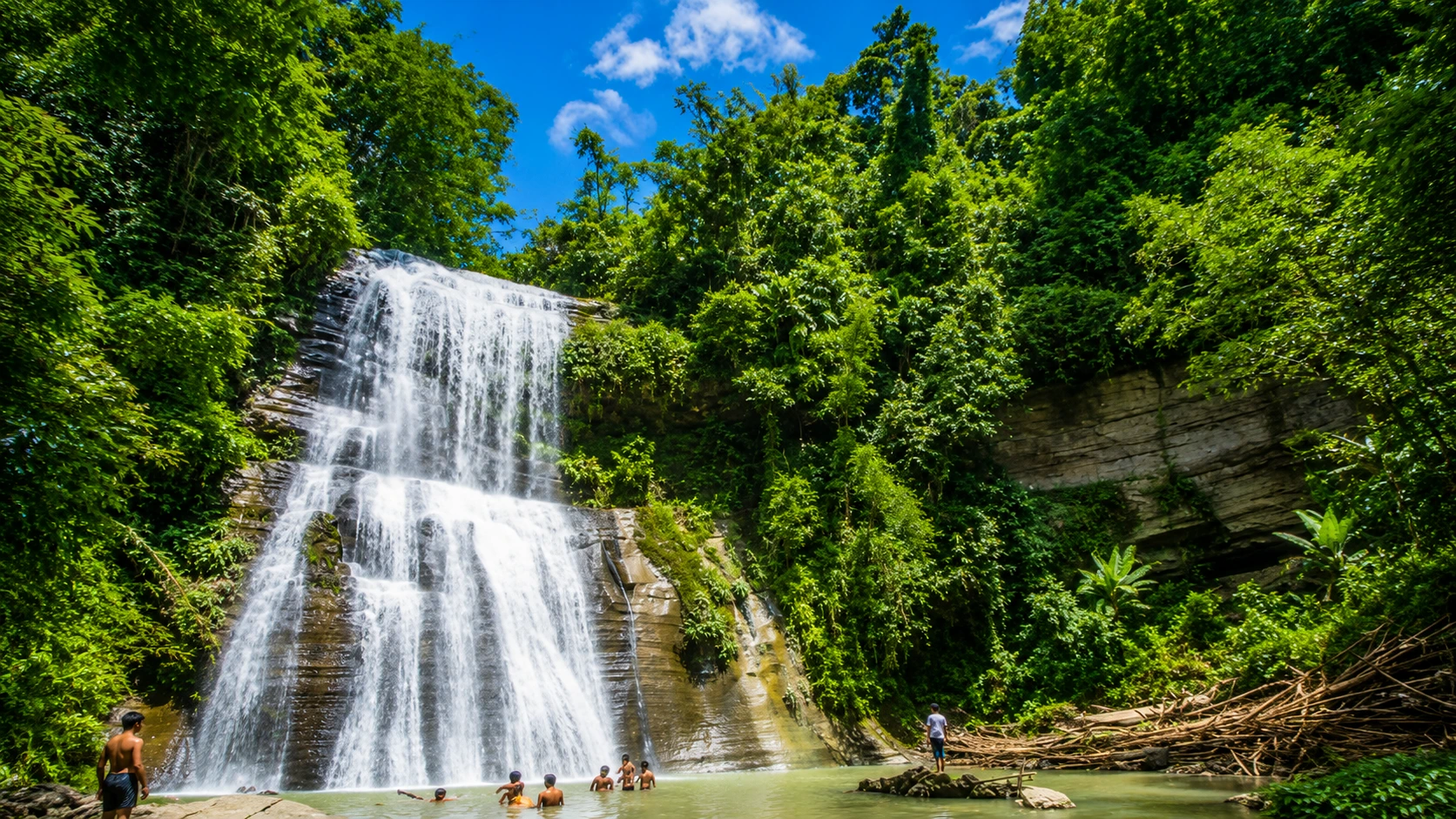
Hum Hum is not for casual visitors. Getting there requires a jungle trek through muddy trails, stream crossings, and at least two hours of walking. That is exactly what makes it special.
The waterfall sits at the end of a forest trail that you can only follow properly with a local guide. The path crosses streams multiple times. The terrain changes constantly. You go through dense sections where the canopy blocks most of the light, then open patches where you can see the hills above. Travel forum communities across Bangladesh consistently describe Hum Hum as Sylhet's best adventure spot.
What the experience is like:
A guided jungle trek through Rajkandi Reserve Forest
Multiple stream crossings along the trail
The waterfall itself, which drops into a pool surrounded by rocks and trees
Best time to visit: Monsoon and post-monsoon season from June to November when the waterfall is at full force. The dry season reduces the flow significantly.
Getting there: Head to Kulaura from Sreemangal or Moulvibazar. From Kulaura, hire a local guide from the nearby villages. Do not attempt the trail alone. The path is not clearly marked and forest conditions change quickly with rain.
9. Visit Shahjalal Mazar Sharif in Central Sylhet
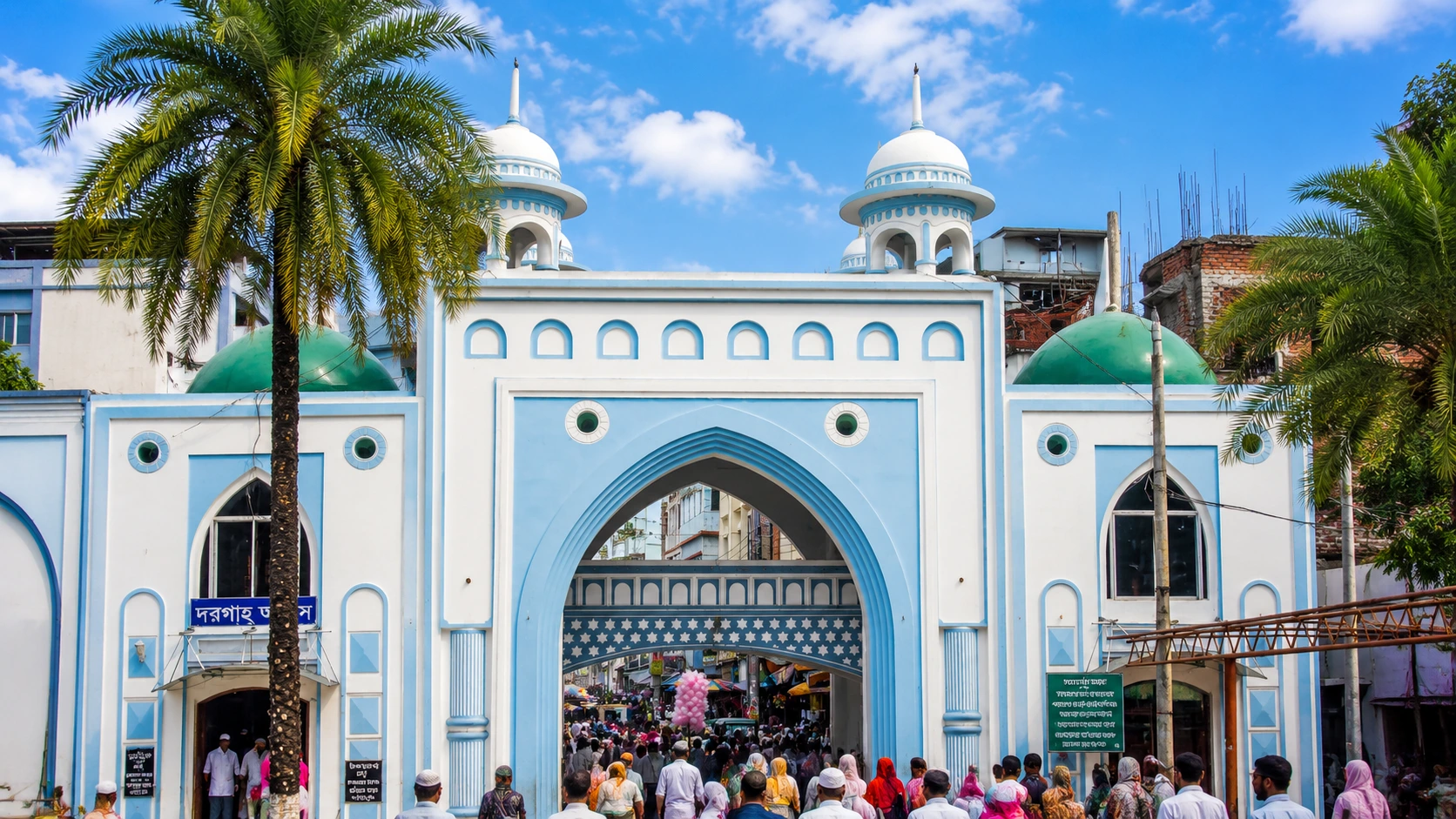
The shrine of Hazrat Shah Jalal sits in the heart of Sylhet city. Shah Jalal arrived in this region in the fourteenth century and played a central role in spreading Islam across northeastern Bengal. His mazar has drawn pilgrims continuously for over 700 years.
The spiritual atmosphere inside the complex is unlike anything you find in the countryside spots. People come from across Bangladesh and from the Bengali diaspora around the world to pray here. The famous giant catfish that live in the pond inside the complex have been there for generations and are considered sacred.
Why you should visit:
The historic significance of the shrine and its role in Sylhet's cultural identity
The peaceful courtyard and prayer atmosphere, which feel genuinely different from the outdoor tourist spots
Local markets and traditional food stalls right outside the mazar gate
Best time to visit: Any time of year. The mazar is open daily. Early mornings and late evenings are quieter and more atmospheric than midday visits.
Getting there: The shrine sits in Sylhet city center, in the Dargah Gate area. Any CNG driver in Sylhet knows this location. The ride from most hotels takes five to fifteen minutes. Moreover it distances 3 KM from Sylhet Osmani Int’l airport that You can check from My Best Fly & get suitable air tickets from Dhaka to Sylhet with convenient booking support,
10. Spend Time at Shah Paran Mazar
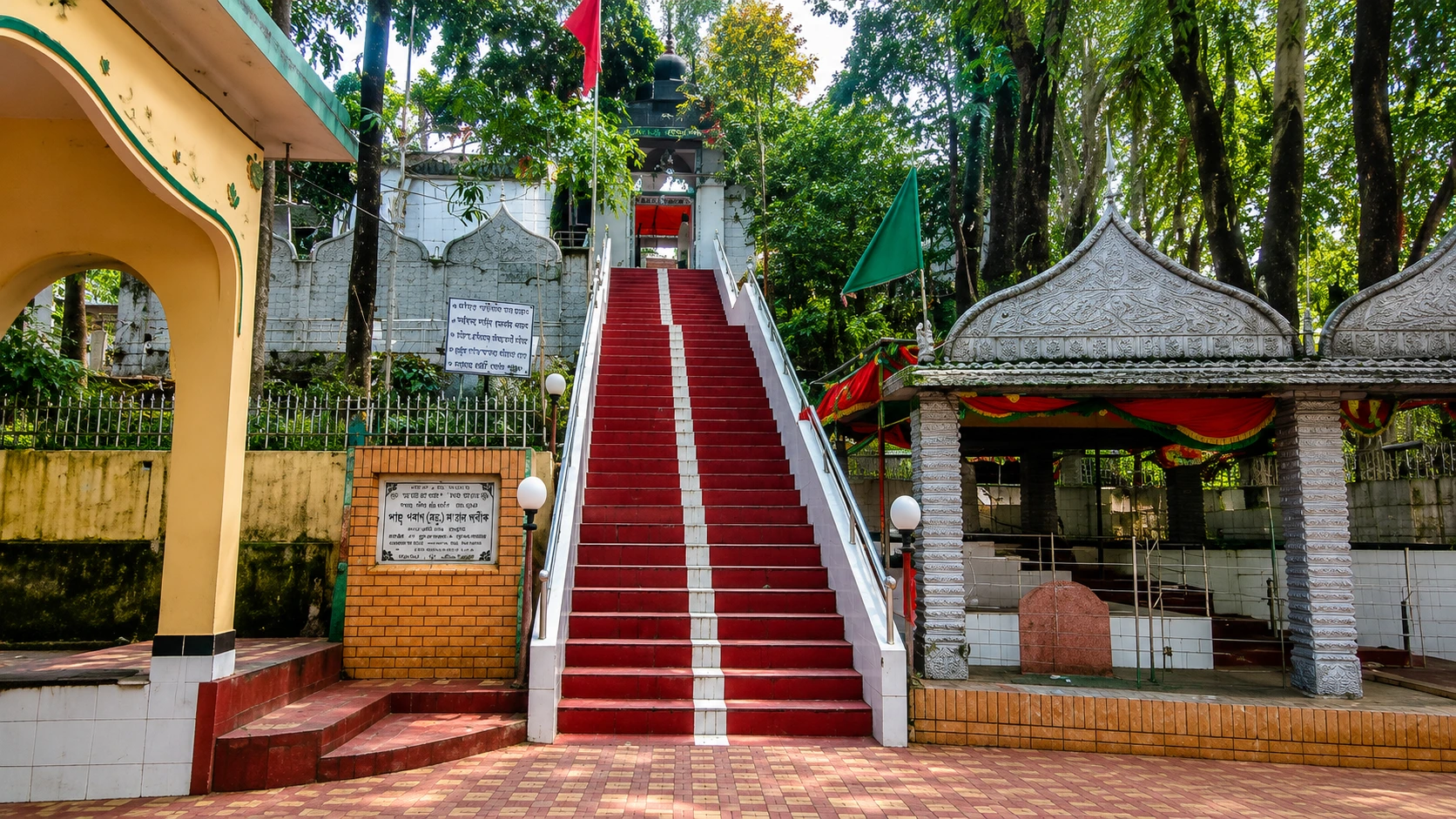
About 8 kilometres from the Shahjalal shrine, Shah Paran's mazar is one of the most important Islamic heritage sites in Sylhet. Shah Paran was the nephew of Hazrat Shah Jalal and came to this region as part of the same mission.
The mazar complex sits in a quieter, more residential part of the city. The architecture here reflects classical Islamic design with arched gateways and an open courtyard. The atmosphere is peaceful and unhurried, quite different from the busier Shahjalal complex in the city center. Pilgrims come to pray. Local families come to sit and reflect. For you as a traveler, this is a chance to see a side of Sylhet that sits completely apart from the river trips and waterfalls.
Why you should visit:
One of the most significant Islamic pilgrimage sites in the Sylhet region
Classical arched gateway architecture and an open peaceful courtyard
A genuinely quiet experience compared to the main Shahjalal complex
Best time to visit: Any time of year. Combine it with the Shahjalal Mazar on the same morning since both are in the city and just 8 kilometres apart.
Getting there: Take a CNG from Sylhet city center toward Shah Paran. The ride takes about 20 to 25 minutes. Any local driver will know the route..
11. Walk the Trails at Khadim Nagar National Park
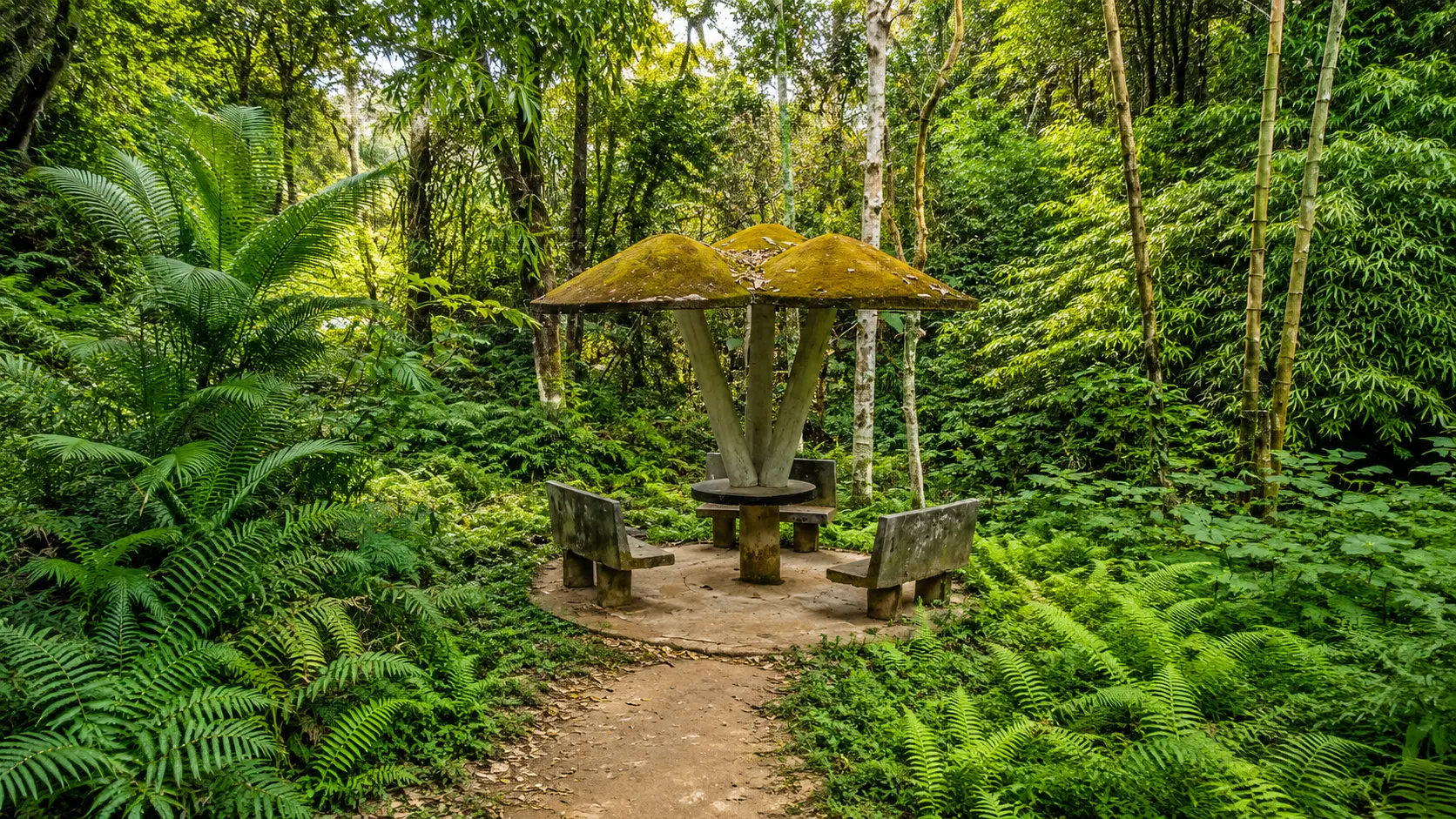
Most travelers in Sylhet do not know this park exists. That is the whole reason to visit it.
Khadim Nagar National Park sits close to Sylhet city and serves as a forest escape without requiring a long journey. The park has proper hiking trails through forested terrain, genuine biodiversity, and quiet picnic spots where you will share the place with almost no one. Think of it as the less crowded, more accessible alternative to Lawachara. You do not get the hoolock gibbons, but you do get real forest, real trails, and real quiet.
Things to do here:
Hike the forest trails through the park's hilly terrain
Sit at the quiet picnic spots away from tourist crowds
Photograph the forest biodiversity up close
Best time to visit: Winter from November to February for the most comfortable hiking conditions. The park works well as a half-day trip directly from Sylhet city.
Getting there: Khadim Nagar is about 14 kilometres from Sylhet city center. Take a CNG from town for around BDT 100 to BDT 150. The park is easy to reach without any tour booking or advance planning.
12. See the Architecture of Sylhet Shahi Eidgah
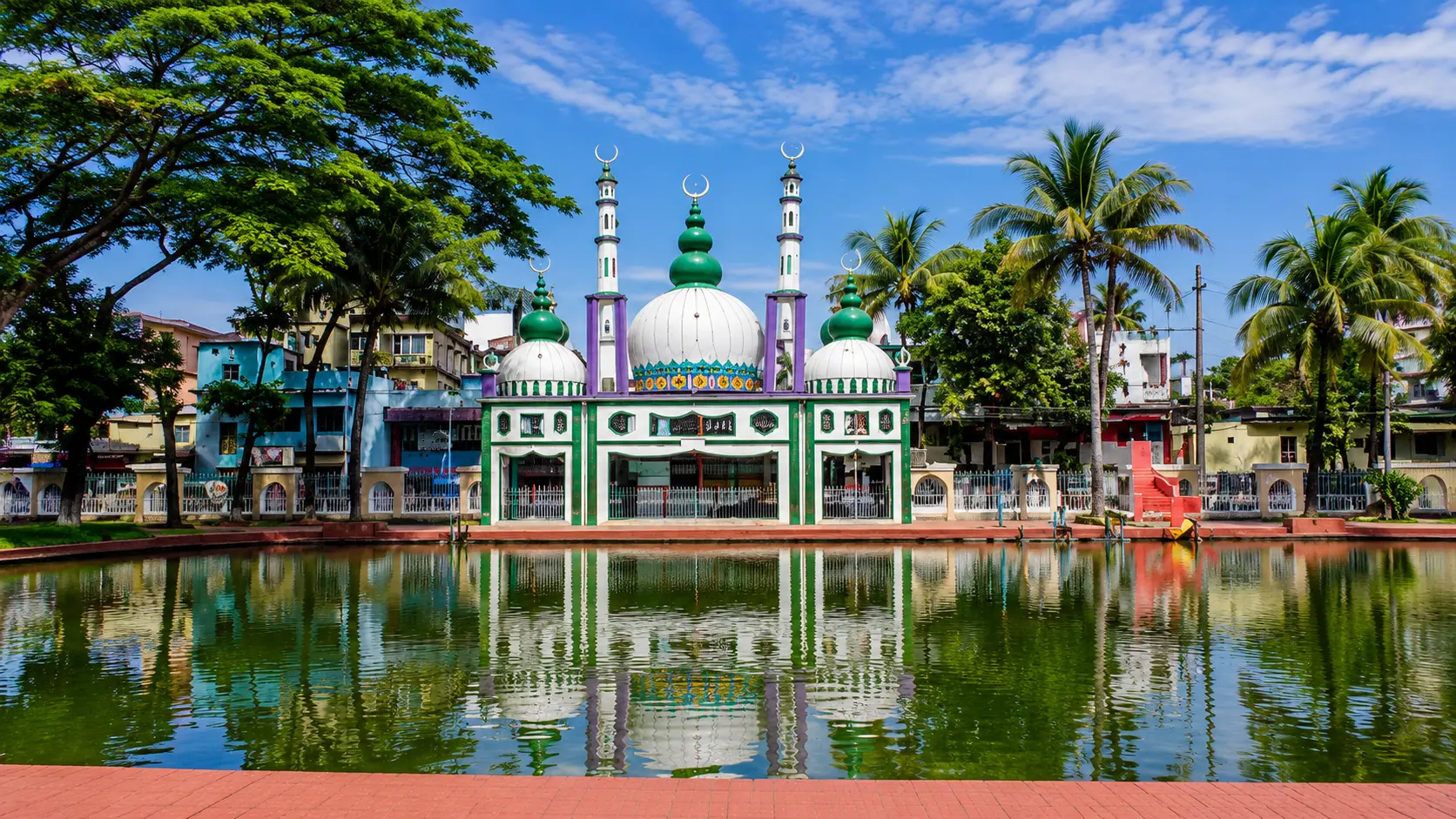
Most travel guides skip this one entirely. That is a gap worth filling.
Sylhet Shahi Eidgah is a Mughal-era structure that dates back centuries. The elevated prayer grounds rise above the surrounding area in a way that makes the structure immediately striking. The Islamic architecture here is distinct from anything you find in the newer buildings across the city. Eid prayers bring tens of thousands of people to this site every year, but on a regular day it is a calm and largely uncrowded historic landmark.
Why you should visit:
One of the oldest surviving Mughal-era religious structures in the Sylhet region
The elevated prayer platform and open grounds give a real sense of the structure's scale
A cultural landmark that almost no competitor travel list bothers to include
Best time to visit: Any day outside major prayer gatherings. A regular weekday morning gives you the place almost entirely to yourself.
Getting there: Sylhet Shahi Eidgah is located in the city center area. Any local CNG driver will know it. Easy to combine with the Shahjalal and Shah Paran shrines on a city heritage day.
13. Find the White Stones at Sada Pathor (Bholaganj)
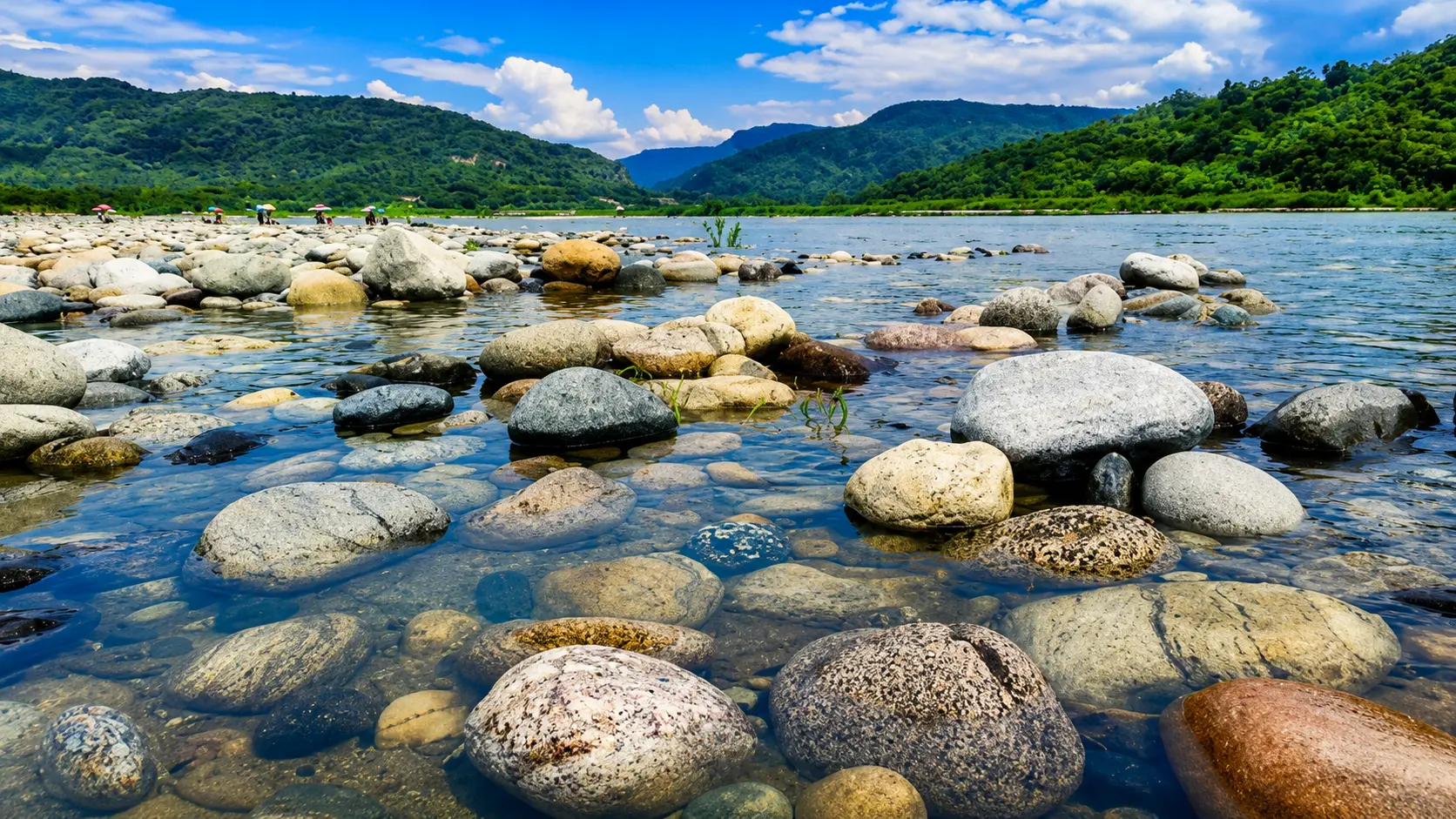
Sada Pathor means white stone. The name tells you exactly what you are getting. A river running over bright white stones with water so clear it looks almost transparent.
Bholaganj sits near the Indian border in Sylhet's Companiganj upazila. The stone collection area here has a completely different character from Jaflong. It is less commercialized, less visited, and more raw. The water running between the white stones looks almost unreal. Reddit travelers on r/bangladesh consistently recommend Sada Pathor as one of Sylhet's best hidden gems. It is the kind of place that gets passed around in travel communities by people who actually went rather than by packaged tour operators.
What makes it genuinely special:
The transparency of the water over the pale stone riverbed
The near-total absence of tourist infrastructure and crowd pressure
The surrounding hills visible across the Indian border
Best time to visit: During or just after monsoon from June to October for the best water levels and the most striking contrast between the white stones and the flowing water.
Getting there: Bholaganj is about 35 kilometres from Sylhet city. Take a CNG or reserved car toward Companiganj. Negotiate a full-day rate for the vehicle since the area has limited local transport. Budget around BDT 1,500 to BDT 2,000 for a return trip.
14. Trek to Aduri Waterfall
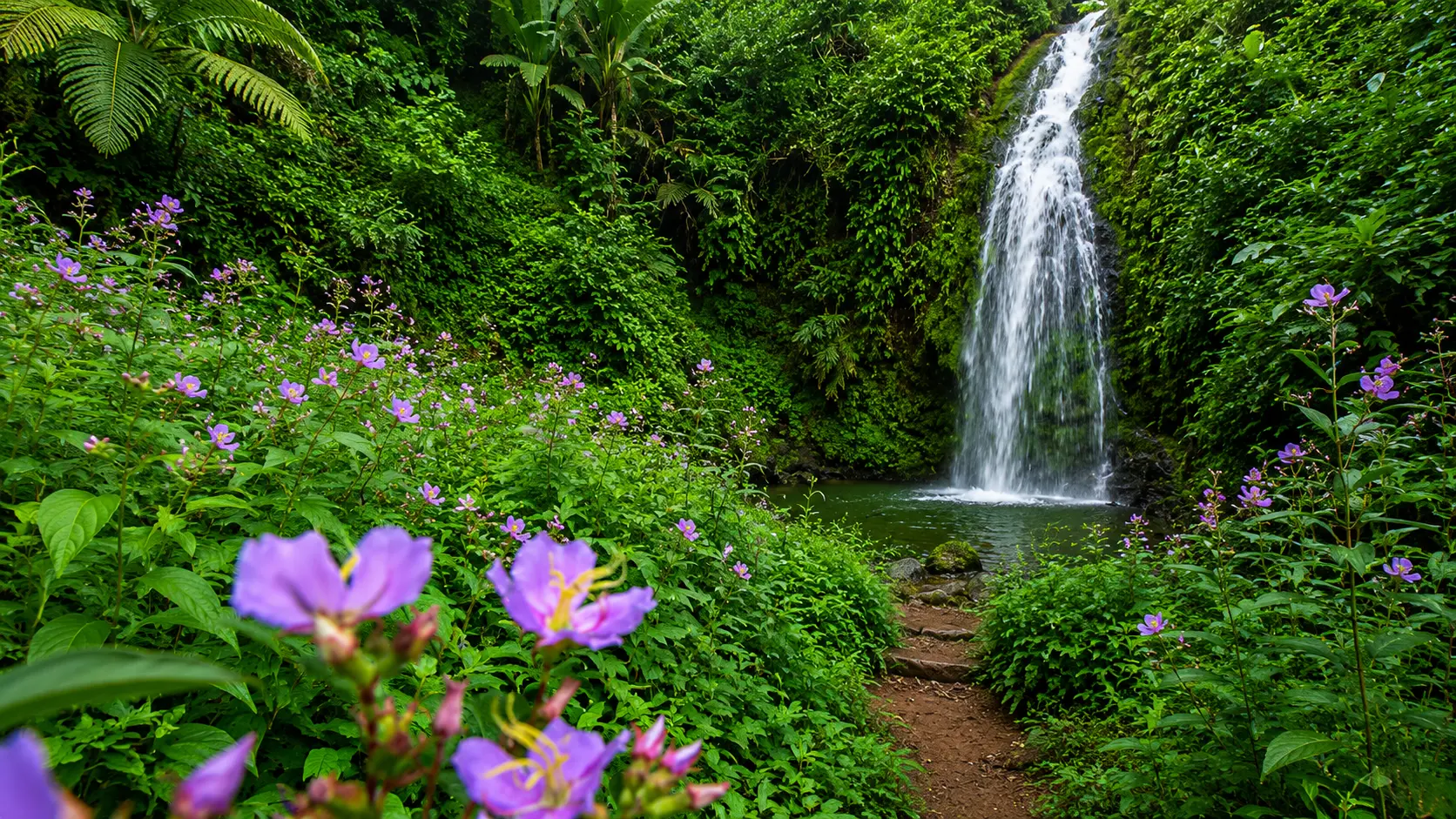
Aduri Waterfall does not appear on most travel lists. Even within Sylhet travel communities, it comes up far less often than Hum Hum or Madhabkunda. That is not because it is worse. It is because it is harder to reach and barely covered.
The waterfall sits surrounded by hills, accessible through a forest path that gives you a quiet, unhurried nature experience. Unlike the more popular waterfall destinations in the region, Aduri does not have the infrastructure, the crowds, or the food stalls. You go, you walk, you arrive.
Best for:
Offbeat travelers who have already done the main Sylhet circuit
Photographers who want a waterfall without 50 other people in the frame
Anyone who prefers the road less taken to the road most visited
Best time to visit: Monsoon and post-monsoon from June to October when the waterfall flows at full strength. Outside this window, the water level drops considerably.
Getting there: Aduri Waterfall is located in the Moulvibazar area. Hire a local guide from Sreemangal or Kulaura who knows the forest trail. Local knowledge is essential here. Do not attempt this one without someone who has done the route before.
15. Spend a Morning at Tilagor Eco Park
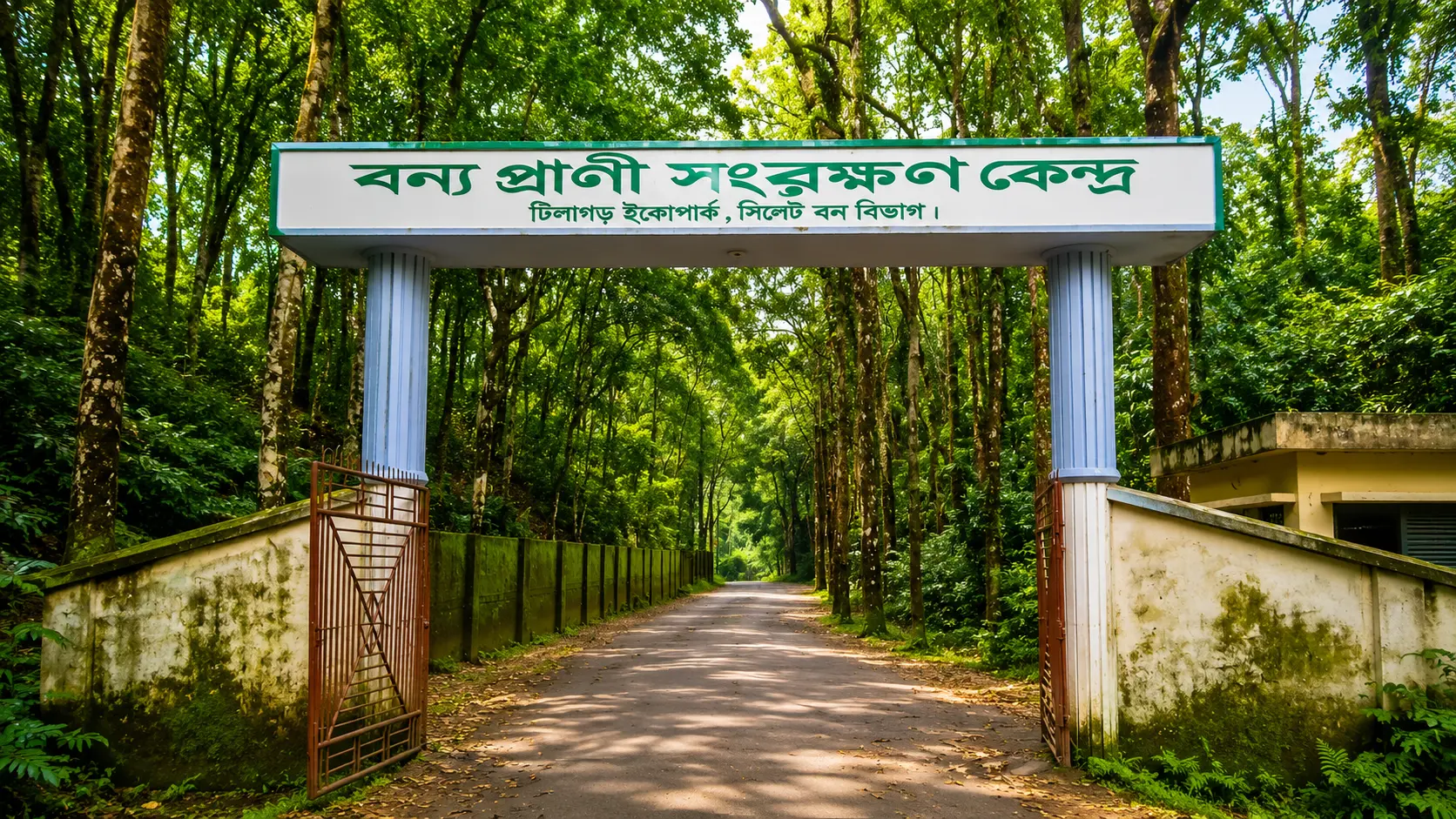
Tilagor Eco Park sits right inside Sylhet city, which makes it one of those places local people actually use on weekday mornings. That alone tells you something: it is genuinely good enough to be a regular destination, not just a tourist stop.
The park has forest trails, streams, small hills, and tea garden surroundings. You can walk the paths, sit by the water, or hike up the gentle slopes for a view over the greenery. It takes a couple of hours to cover at a relaxed pace. Major travel blogs barely mention Tilagor. Local Sylheti travelers return to it regularly. That gap says more than any review could.
Things to do here:
Walk the forest trails through the park's hilly terrain
Sit by the streams and take in the quiet green surroundings
Hike the gentle slopes for a view over the tea garden landscape
Best time to visit: Early morning on any day. The park is freshest before 9 AM when the light is soft and most of the city is still asleep.
Getting there: Tilagor is inside Sylhet city, roughly 4 to 5 kilometres from the city center. A short CNG ride costs around BDT 50 to BDT 80. No advance booking required. Just show up.
Know Which Season Works Best for the 15 Best Places to Visit in Sylhet
Monsoon season: June to October This is the best season for waterfalls and rivers. Ratargul fills up completely and becomes the flooded forest experience it is famous for. Hum Hum and Madhabkunda both roar. Bichanakandi's hillside waterfalls appear. Jaflong and Lalakhal look their greenest. The trade-off is rain, muddy paths, and occasional travel disruptions. Come prepared and the monsoon rewards you.
Winter season: November to February The best weather for sightseeing and trekking. Lawachara is comfortable to walk in. Sreemangal is cool and pleasant for cycling. Road trips along the tea garden routes are at their best. The waterfalls carry less water but the trails are safer and drier.
Which season fits which attractions:
Go in monsoon for Ratargul, Hum Hum, Madhabkunda, Jaflong, and Bichanakandi
Go in winter for Lawachara trekking, Sreemangal cycling, Lalakhal boat tours, and the heritage sites in Sylhet city
Follow This 3-Day Sylhet Itinerary to see Most of the 15 Best Places in Sylhet
Day 1: Jaflong, Lalakhal, and Tea Gardens Start early and head to Jaflong. Spend the morning at the river, take a boat ride, and visit the Khasi village. Return toward Sylhet in the afternoon and stop at Lalakhal for the famous turquoise water and a boat tour. In the evening, drive through the tea garden roads near the city. End the day with Sylheti food in town.
Day 2: Ratargul, Bichanakandi, and Local Food Leave early for Ratargul. The boat entry costs BDT 700 to BDT 1,500 and the entry fee is BDT 50. Spend two to three hours in the swamp forest. In the afternoon, head to Bichanakandi for the rock river and mountain stream scenery. End the day with proper Sylheti food: shatkora beef, hilsa from the river, and seven-layer tea if you have not had it yet.
Day 3: Hum Hum or Madhabkunda, Lawachara, and Sreemangal Pick your adventure level. If you want a harder trek, go to Hum Hum with a guide. If you want a bigger waterfall with easier access, Madhabkunda is the right call. Either way, follow it up with a walk through Lawachara National Park near Sreemangal. Finish the day cycling through the tea estates and eating at a local tea garden restaurant.
How to Get There from Dhaka
The easiest and most comfortable way to travel from Dhaka is by air. Instead of spending long hours on complicated routes, flights help you save time, reduce travel stress, and start your trip fresh. From Dhaka, you can find several flight options depending on your destination, budget, and preferred travel time. It is always better to compare prices, transit time, baggage allowance, and airline facilities before booking.
For a simple and reliable flight booking experience, you can check My Best Fly. They help travelers find suitable air tickets from Dhaka to Sylhet with convenient booking support, competitive fares, and guidance for choosing the best available flight option.
Tip: Book your air ticket early to get better prices and more flexible flight choices.
Travel Tips, Transport, and Safety Guidelines
Most travelers rent a private CNG or a reserved car for the day when covering multiple spots. This costs between BDT 1,500 and BDT 3,000 depending on distance and negotiation. For Sreemangal and Lawachara, cycling is the best option. Rent a bicycle from the Sreemangal town center for BDT 100 to BDT 150 per day.
What to pack:
Sandals or waterproof footwear for river destinations like Jaflong, Bichanakandi, and Ratargul
Rain protection during monsoon season. A compact poncho works better than an umbrella on forest trails
Trekking shoes with grip for Hum Hum and Lawachara. The trails get muddy and the stream crossings require proper footing
Safety tips:
Always hire a local guide for Hum Hum. The trail is not clearly marked and forest conditions change with the rain
Check weather forecasts before any river trip during monsoon. Flash flooding can make some routes unsafe very quickly
Negotiate transport fares before you get in any CNG or boat. Prices for tourists are usually set above the local rate
Frequently Asked Questions
What is the best place to visit in Sylhet?+
That depends entirely on what you want. For natural beauty and photographs, Jaflong and Lalakhal are the top picks. For the most unique experience in all of Bangladesh, Ratargul during monsoon is hard to beat. For adventure, Hum Hum wins.
Is Sylhet better during monsoon or winter?+
Both are genuinely good, just different. Monsoon gives you the best waterfalls, fullest rivers, and the most dramatic scenery. Winter gives you the best trekking weather, clearer roads, and more comfortable conditions. If you can only go once, monsoon gives you Sylhet at its most dramatic. Winter gives you Sylhet at its most comfortable.
How many days are enough for Sylhet?+
Three days covers the highlights. Four or five days lets you add the hidden gems like Sada Pathor, Aduri Waterfall, and Tilagor Eco Park without feeling rushed.
Which waterfalls are worth visiting? +
Madhabkunda is the largest and most accessible. Hum Hum is the most rewarding if you enjoy trekking. Aduri is the most off-the-beaten-path option. For monsoon visitors, all three are best seen between June and October.
What is the best tea garden in Sylhet?+
The Finlay Tea Estate near Sreemangal is the most photogenic and the most accessible. Cycling through the estate roads gives you the full experience. Nilkantha Tea Cabin in Sreemangal town is the place to try the seven-layer tea.
Is Ratargul worth visiting? +
Absolutely. As the only swamp forest in Bangladesh and one of the few freshwater swamp forests in the world, there is nothing else in the country that gives you the same experience. Go during monsoon.
Which places are best for couples?+
Lalakhal for the boat tours and riverside atmosphere. Jaflong for the hills and scenic scenery. The Marine Drive equivalent here is the road through the Sreemangal tea estates at sunset. All three are naturally romantic without requiring any manufactured setup.
Are there adventure activities in Sylhet?+
Yes. Hum Hum waterfall trekking is the top adventure option in the region. Lawachara forest treks give you a milder but still active outdoor experience. River boat rides at Ratargul and Bichanakandi both involve navigating natural terrain.
Conclusion
Sylhet is not a place you see in one go. It adds up over time. The tea gardens in the morning. The boat went through flooded trees at noon. The turquoise river in the afternoon light. A plate of shatkora beef at a local restaurant as the sun goes down. Then another day, another waterfall, another trail.
The rivers, the forests, the waterfalls, the tea estates, the shrines, and the wildlife all live within a few hours of each other. That concentration of completely different experiences is what makes Sylhet unlike any other destination in Bangladesh.
Most travelers come for Jaflong and Ratargul and leave thinking they have seen it all. But they have not. Sada Pathor, Aduri, Tilagor, Hum Hum, Lawachara, each one adds something the main list cannot give you.
Go beyond the standard checklist. Take the muddy trail. Hire the local guide. Sit longer by the river. Sylhet rewards the traveler who slows down, and it punishes no one for taking one more cup of tea before moving on.
- Flights
Written by
Jahidul Islam
Senior Developer
Jahidul Islam is a tech writer and software engineer with 5+ years of experience in full-stack development. She loves writing clean code, exploring new frameworks, and helping others learn through tutorials and articles.